

[SCI-FI] CITIES AS WESTERN GRAND STRATEGY
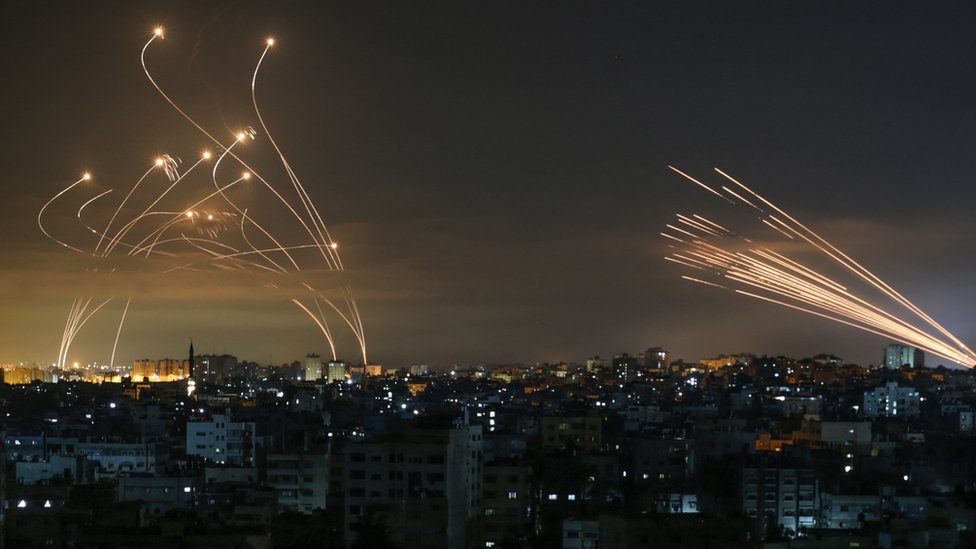
Israel’s Iron Dome, David’s Sling, Arrow and Thaad missile defences repel Iranian missiles.
Throughout the twentieth and early twenty-first centuries, few scholars have done more to revitalise our understanding of grand strategy than Professor Sarah C. M. Paine, formerly the William S. Sims University Professor at the U.S. Naval War College. Trained at Harvard, Middlebury, and Columbia, Paine stands within the lineage of Mahan, Kissinger, and Paul Kennedy, yet brings to the study of power a distinctive emphasis on institutions, geography, and the long arc of civilisational endurance.
Paine defines grand strategy with characteristic clarity:
“Grand strategy is the integration of all relevant instruments of national power in the pursuit of national objectives.”
This integration — political, military, economic, technological, legal, and cultural — is, for Paine, the essential work of states that aspire to shape history rather than be shaped by it. Strategy is not a plan; it is the architecture by which a civilisation aligns means to ends over decades, sometimes centuries.
In what follows, I argue that the West’s next and necessary grand strategy is the deliberate construction of [Sci-Fi] cities.
These are not fantasies or speculative visions. They are the latest expression of a historical pattern in which cities fuse themselves with the infrastructure of each new Industrial Revolution. The first Industrial Revolution transformed cities with factories and railways; subsequent revolutions laid electrical grids, telephony, highways, and digital networks across the urban form; the last two decades have added data centres, fibre backbones, and planetary information systems.
[Sci-Fi] cities are simply those urban systems that are completing — or have completed — the fusion with the two newest Industrial Revolutions: the revolution in artificial intelligence and the revolution in space industrialisation.
They are technologically advanced, hardened, purpose-built cities that integrate their economies with three mutually reinforcing domains: digital AI, physical AI, and space infrastructure. Accelerating this fusion grants Western cities new productive capabilities and significant economic upside, while providing the AI and space sectors with what they require to scale: abundant, affordable, widely distributed infrastructure connected to the world’s most valuable markets.
These cities form a new civilisational substrate — at once industrial, cognitive, and orbital — capable of sustaining Western power in a century defined by multipolar rivalry, demographic contraction, climate instability, and the accelerating logic of autonomous systems.
This argument rests directly upon Paine’s principles.
I. Grand Strategy Is Long-Term Coordination
Paine insists that genuine grand strategy must extend beyond electoral cycles and personalities:
“Paine defines grand strategy as the integration of all relevant instruments of national power in pursuit of national objectives, a framework that inherently spans beyond individual administrations or political factions.”
Western states today lack this alignment.
Their ageing infrastructure, fragmented regulatory systems, and fiscal constraints have produced cities that strain under the weight of twenty-first-century demands. Meanwhile, rival powers build industrial capacity, space infrastructure, and new cities at a pace the West has not matched.
[Sci-Fi] cities restore the West’s ability to coordinate long-range power.
They harden existing cities; they build new industrial nodes where none presently stand; and they create forward bases for AI, robotics, aerospace, and energy systems that must operate in real time. These are long-term architectures, not policy increments — structural commitments that will endure beyond any given government.
II. Institutions Determine Destiny
Paine’s historical work demonstrates that geography offers opportunities, but institutions determine whether states can transform those opportunities into enduring power:
“Grand strategy integrates all relevant elements of national power. It extends far beyond military power to encompass economic influence, co-ordination with allies, intelligence, institution building, international law, and more.”
Cities are the highest-order institutions the West possesses — the engines of its GDP, innovation, culture, and talent aggregation. Yet no Western power has undertaken a civilisational project to redesign its urban foundations for the world now emerging: a world of autonomous robotics, satellite sensing, AI-driven industry, and climatic volatility.
[Sci-Fi] cities function as upgraded institutions of power.
They translate Western geographic advantages — coastlines, research universities, innovation clusters, and rule-of-law markets — into durable strategic superiority by embedding advanced compute, real-time sensing, space launch access, and autonomous industry into their physical fabric.
Without institutional transformation at the urban scale, geographic advantage will decay into historical nostalgia.
II.a. Healthy, Productive Cities as Foundations of Civilisational Stability
My research in Urban HEALTHONOMICS arrives at a complementary conclusion: strong, well-designed cities are the primary determinants of population health, productivity, and long-term fiscal stability.
The stakes are enormous.
Western-aligned cities today generate over $50 trillion in GDP — roughly half of global economic output.
These cities are not simply population centres; they are the economic engines upon which the entire Western political order rests.
And yet they face a convergence of structural pressures:
rising chronic disease
declining productivity
ageing populations
spiralling healthcare costs
climate disruptions the IMF warns could destabilise Western democracies
infrastructure too fragile for the new technological regime
Healthy cities reduce long-term healthcare costs, expand labour productivity, and reinforce the economic base on which democratic legitimacy depends. Failing cities do the opposite: they erode tax bases, heighten political polarisation, weaken democratic institutions, and impose unsustainable fiscal burdens.
In this sense, the construction of [Sci-Fi] cities is not only a grand-strategic imperative; it is a civilisational survival mechanism.
Only cities that integrate advanced technology, autonomous infrastructure, resilient design, and high-quality living environments can sustain the demographic and economic foundations of Western democracy in the century ahead.
Thus the conclusions of Urban HEALTHONOMICS reinforce Paine’s insight: without strong institutions — and cities are our most important institutions — strategy collapses from within.
II.b. Cities as the Decisive Terrain of Modern Conflict
If cities are the West’s greatest economic institutions, they have also become the decisive terrain of modern warfare. Recent conflicts only underscore this reality.
Ukraine’s resilience since 2022 has been sustained not by its rural expanse but by the economic strength of Kyiv, Lviv, Odesa, and Dnipro — cities that generated the fiscal capacity, logistics, and manufacturing needed for national defence. Russia, fully aware of this, has deliberately targeted Ukrainian cities in an attempt to collapse the country’s institutional core.
The same logic governs Israeli strategy.
Israel’s survival depends on the protection of Tel Aviv, the country’s economic and diplomatic engine. The Iron Dome system — arguably the most sophisticated urban defence architecture ever constructed — exists to preserve the city’s viability. Without it, Israel could not have conducted long-range operations against Iran, Qatar, and others, nor reshaped Middle Eastern diplomacy. The defence of one city underwrote an entire strategic realignment.
This understanding is now reflected in Western doctrine.
The Golden Dome Executive Order in the United States identifies “counter-value” targets — cities, civilian infrastructure, schools, hospitals — as requiring special protection in an age when adversaries increasingly bypass military forces and strike directly at a nation’s economic heart.
The global evidence is stark.
Aleppo, Mosul, Sana’a, Mogadishu, and Gaza illustrate the catastrophic costs of urban conflict. Increasingly, the world’s most violent confrontations are fought in densely populated urban areas, at devastating cost to civilians and to the institutional foundations of national life.
Western militaries — long reluctant to fight in cities — now recognise that the future of conflict is fundamentally urban. NATO analyses, U.S. Army doctrine, and strategic studies across the West converge on this conclusion: cities are the central battlegrounds of the twenty-first century.
Humanitarian organisations such as the ICRC and UNHCR have adapted accordingly, operating not in remote camps but in besieged cities, responding to infrastructural collapse and mass displacement.
Three forces drive this shift:
Global urbanisation — unprecedented concentrations of people and economic value.
Domestic political volatility — especially in developing states where cities are both power centres and flashpoints.
Changing character of war — hybrid warfare, grey-zone tactics, and precision strikes target institutions rather than armies.
The strategic implication is clear:
If cities fail, nations fail. If cities endure, nations endure.
In this context, [Sci-Fi] cities — resilient, autonomous, fortified, and economically generative — are not merely instruments of prosperity but instruments of survival.
III. Space as the New Maritime Domain
A central theme in Paine’s scholarship is the distinction between continental and maritime powers:
“The Industrial Revolution upended empires of both types by producing compounded growth. Maritime empires, already focused on trade, were far better positioned to adapt to this change than were continental empires bent on dominating territory.”
For five centuries, control of the seas conferred unparalleled geopolitical advantage. Today, however, the maritime frontier is shifting.
Space is becoming the new ocean.
Orbital highways, launch corridors, satellite constellations, in-space manufacturing, and cislunar logistics now form the architecture of global power. The civilisation that masters this domain will secure the same advantages once derived from naval supremacy — but on a virtually limitless scale.
Every major Western seaport — Venice, Amsterdam, London, New York — began as an industrial-technological node.
Spaceport cities will follow — and surpass — that developmental trajectory, becoming gateways to domains with no borders and no material limits.
[Sci-Fi] cities are the institutional foundations of Western maritime dominance in the orbital age.
IV. Integration, Not Accumulation, Determines Victory
Paine’s central insight is deceptively simple yet historically exhaustive:
“Victory belongs to the side that best integrates its instruments of power—not the one with the most of any single instrument.”
Across centuries, the dominant powers of each era succeeded not because they possessed the largest armies, deepest treasuries, or most inventive technologists in isolation, but because they orchestrated these assets into a single, mutually reinforcing system.
Venice aligned commerce with naval power; Britain fused industrial production with financial architecture and maritime supremacy; the United States integrated scientific research, democratic alliances, industrial depth, and global communications infrastructure into a coherent Cold War posture.
Failures followed the opposite pattern.
Imperial Japan had advanced military technology but fractured civil-military decision-making.
Tsarist Russia possessed vast manpower but lacked institutional cohesion.
The late Ottoman Empire had territory but no integrative administrative machinery.
The lesson is unambiguous: disaggregated strength is not strength.
This is the West’s predicament today.
It has world-class innovators in AI, globally admired cities, unmatched scientific institutions, leading aerospace firms, and the world’s deepest capital markets — yet these assets remain uncoordinated, spatially divided, technologically fragmented, and often constrained by legacy urban and regulatory systems that prevent them from operating as a unified strategic engine.
[Sci-Fi] cities resolve this structural incoherence.
They function as integration platforms, combining:
compute (the nervous system)
physical AI and robotics (the muscular system)
urban economic density (the circulatory system)
advanced infrastructure (the skeletal system)
orbital industries (the extended limbic and perceptual system)
In other words: they turn Western power from an archipelago of isolated strengths into a single continental mass.
Instead of a scattered geography of uncoordinated capabilities, [Sci-Fi] cities consolidate them within resilient, high-bandwidth, launch-adjacent urban systems capable of supporting real-time AI, autonomous defence, industrial production, and orbital logistics simultaneously.
They are not only cities.
They are strategic integrators — the first in Western history designed specifically for the AI–orbital age.
They make Paine’s dictum operational: they allow the West to integrate what it already excels at, and thereby transform latent potential into enduring advantage.
V. Off-World Resources and the Industrial Deep Field
Great powers rise when they secure monopoly-like access to the frontier resources of their era. (See Dutch Republic, Spanish Empires, British East India Company, SpaceX)
For early agrarian civilisations, the decisive resources were water, land, and grain.
For maritime powers, it was trade routes, timber, metals, and shipyards.
For industrial powers, coal, steel, oil, rubber, and rare minerals became the engines of national transformation.
Today, the resource frontier has moved again — off-world.
The Industrial Deep Field beyond Earth contains wealth on a scale that dwarfs terrestrial reserves. Among its most significant domains:
Platinum-group metals in near-Earth asteroids
Single asteroids contain more platinum, iridium, and rare metals than all known terrestrial deposits combined. Their capture would reconfigure global industrial supply chains.
Lunar ice
A vast reservoir of hydrogen and oxygen — the ingredients for life support and rocket fuel. Lunar propellant depots will be the coaling stations of the orbital age.
Orbital solar energy
Ten times the energy density of terrestrial solar, uninterrupted by night or atmosphere. The civilisation that harnesses it unlocks a new industrial revolution.
Electromagnetic spectrum and orbital slots
The economic value of spectrum and low-Earth orbital real estate now rivals ports and canals of the nineteenth century — the new chokepoints of global information and autonomy.
Microgravity manufacturing
Microgravity enables production of ultra-pure proteins, fibre, alloys, and semiconductors impossible on Earth. These will form the backbone of next-generation computing, medicine, and materials science.
6The vast hydrocarbons and volatile-rich bodies of the outer system
Jupiter’s moons and other gas-rich bodies provide the raw materials for long-duration fuel cycles, polymer manufacturing, and deep-space industrialisation.
These resources comprise the largest unclaimed industrial basin in human history.
But they will not be accessed from Cape Canaveral alone, nor from Silicon Valley or London as they currently exist.
They require something the West does not yet possess:
an urban-industrial architecture capable of interfacing Earth’s economic systems with orbital and lunar operations.
This is the purpose of [Sci-Fi] spaceport cities.
They are the industrial exoskeleton of Western space power — cities that integrate:
launch and landing zones
downlink and mission operations
fabrication of robotics, habitats, and spacecraft
AI-run logistics
high-density immersion-cooled compute
energy and heat-recycling infrastructure
training grounds for physical AI at scale
hardened, resilient civic systems
Just as Liverpool, Boston, and Rotterdam industrialised the oceans, spaceport cities will industrialise the Earth–Moon system.
They will be the staging grounds from which Western civilisation enters the Industrial Deep Field — and the guarantors that this new domain remains governed by open institutions, not closed imperial hierarchies.
Without [Sci-Fi] cities, off-world resources remain theoretical.
With them, they become the next engine of Western prosperity and power.
Conclusion: A Civilisational Imperative
To speak of [Sci-Fi] Cities as Western Grand Strategy is not to indulge in futurism.
It is to recognise that the foundations of Western power — economic, demographic, technological, military, and geopolitical — now depend on the rebuilding of its most fundamental institutions: its cities.
Paine teaches that civilisations endure when they integrate their instruments of power into coherent, long-term architectures.
[Sci-Fi] cities are that architecture.
If the West is to remain a shaping force rather than a shaped one, it must embrace a grand strategy adequate to the autonomous and orbital century.
[Sci-Fi] cities are that strategy.
