

THESIS
THE WEST needs another Seaport-City Prime.
It needs a Spaceport-City Prime.
THESIS The West has entered a period of structural stagnation and geopolitical challenge. The abundant sci-fi future we were promised has never been further away.
Its cities — historically the engines of economic growth and the substrate of its civilisation — are no longer capable of winning the next techno-economic phase, defined by the convergence of the AI and space race.
At the same time, this competition is shifting beyond Earth, where orbital infrastructure and space industrialisation will determine long-term economic and geopolitical advantage.
These are not separate challenges. They are constrained by the same underlying problem: the West is too slow to dominate this next phase.
ROMULLUS addresses this directly.
We build the high-cadence strategic infrastructure required for the industrialisation of the Moon and Mars and deploy it on Earth first—accelerating the West’s $50 trillion urban economy, revitalising the built environment, and refining these systems ahead of off-world deployment.
In practice, this means:
Replacing and buttressing existing urban infrastructure with Mars-grade systems.
Expanding the foundations of the urban economy with high-cadence, Mars-grade Cities.
Doing this creates a flywheel that simultaneously accelerates our urban economic base and industrialises space faster than our adversaries.
This isn't new.
China has already demonstrated the power of using strategic, vertically-integrated cities to accelerate national speed and throughput. To date, they’ve built 5 vertically integrated spaceport cities and 1400 factory cities that generate $2 trillion in GDP.
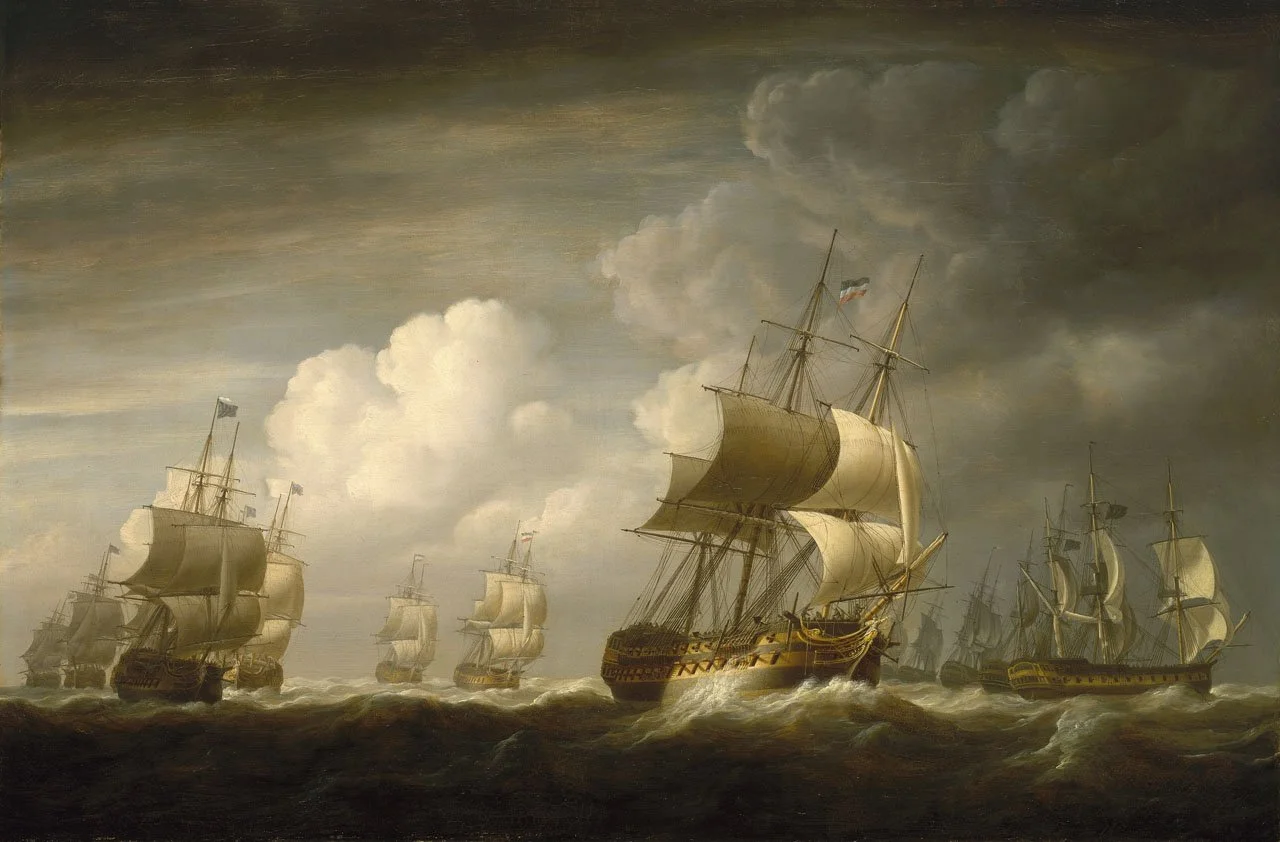
Fortunately, every era of Western history has produced at least one “Seaport-City Prime”: an institution responsible for increasing the resilience and cadence of a home urban-economic base (city) and building a network of strategic port cities that enabled its civilisation to scale throughput and compete in a challenging geopolitical environment. Often against much larger opponents.
This role has been played by Athens, Rome, Venice, Genoa, the Dutch East India Company, the British East India Company, and most recently SpaceX.
Athens increased the cadence of its core urban economic base by integrating the city with Piraeus: its fortified naval port, dockyards, ship sheds, and the Long Walls. This infrastructure was enhanced by a maritime network of high-throughput allied ports, tribute flows, grain routes, and naval power across the Aegean.
Rome upgraded the cadence of its urban economic base through roads, aqueducts, harbours, granaries, military colonies, and the port infrastructure of Ostia and later Portus. These systems connected Rome to a Mediterranean network of high-throughput port cities that moved grain, troops, materials, and capital at imperial scale.
Venice upgraded its urban economic base through the Arsenal, docks, merchant finance, convoy systems, and specialised maritime institutions. It then extended this model through the Stato da Màr, a network of ports, islands, fortresses, and commercial cities across the Adriatic and eastern Mediterranean.
Genoa upgraded the productivity of its urban economic base through shipbuilding, banking, maritime insurance, port infrastructure, and merchant-financial institutions. It built a distributed network of high-volume trading posts, and fortified port cities across the Mediterranean and Black Sea.
The Dutch East India Company accelerated Amsterdam’s urban economic base through shipyards, canals, exchanges, warehouses, maritime finance, and global trading infrastructure. It built a network of high-capacity fortified commercial ports, including Batavia and the Cape, that streamlined connections between European capital and Asian production and trade.
The British East India Company increased the productivity of Britain’s urban economic base by building docks, shipyards, canals, warehouses and linking London’s financial and commercial infrastructure to high-throughput port cities such as Bombay, Madras, Calcutta, Hong Kong, Singapore and Sri-Lanka. Over time, this evolved into a high-cadence logistics, naval, administrative, and industrial network that supported British global power.
SpaceX upgraded Brownsville’s economic base by turning Boca Chica into Starbase: a vertically integrated spaceport, factory, test site, launch complex, energy system, and incorporated city. It is now building the West’s first high-cadence spaceport-city, linking launch, manufacturing, satellite networks, AI compute, and future off-world infrastructure.
The West needs another Seaport-City Prime.
It needs a Spaceport-City Prime.